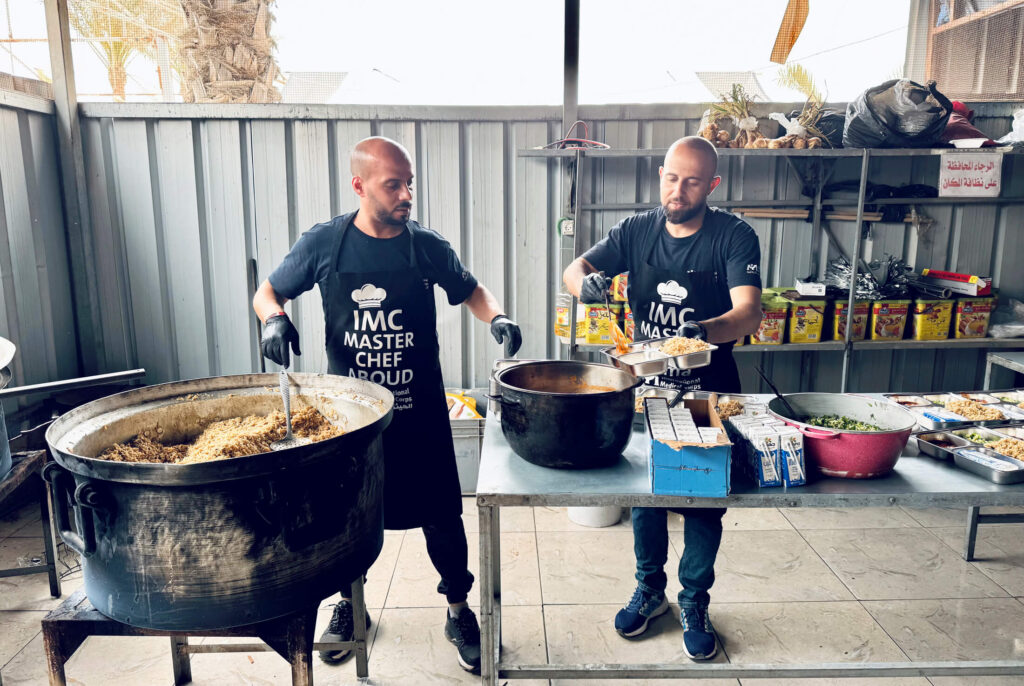
When Rasha Saqallah joined International Medical Corps’ first field hospital, located in Rafah, in 2024 to work as a chef in the hospital’s kitchen, she had no idea how demanding her job would be. She was one of the first chefs to arrive and was taken aback by the sheer number of patients and injuries, as well as by the volume of meals required. “I’d prepare anywhere from 30 to 100 meals every day, catering to the specific dietary needs of patients with fractures, burns and amputations,” she says.
Rasha was committed to serving the patients admitted to our field hospital. Lack of transportation forced her to walk long distances in sometimes dangerous conditions to reach the field hospital from her home.
“What keeps me going is a genuine desire to help the people in Gaza who have already lost so much,” says Rasha, who views food as more than nourishment—for her, it’s a tool for dignity, comfort and emotional healing.
International Medical Corps currently has three field hospitals in Gaza: in Al Zawaida, Deir Al Balah and Gaza City. Together, they cover an area containing hundreds of thousands of civilians, offering such services as emergency and trauma care, obstetric and newborn care, nutrition, child protection and vaccination services, mental health and psychosocial support, and services to address violence against women and girls.


What often goes unnoticed, however, are the kitchens within the field hospitals—spaces that help in recovery, that sustain staff through long and demanding days, and that translate clinical nutrition plans into tangible care. These kitchens—and their staff—serve as the silent backbone of the hospitals, preparing hundreds of meals every day for patients, caregivers and staff.
Specialised Diets for Individual Needs
Chef Ebrahim Badwan works in the main kitchen at the Deir Al Balah field hospital. Together with his colleagues, he prepares 900 to 1,000 meals every day, including breakfast, lunch and dinner for inpatients, and lunch and dinner for staff. Of course, the number of meals varies based on the number of patients admitted at any given time. Every week, we provide at least 14,000 meals—prepared in the kitchens at the Deir Al Balah and Gaza City field hospitals—to patients and staff.
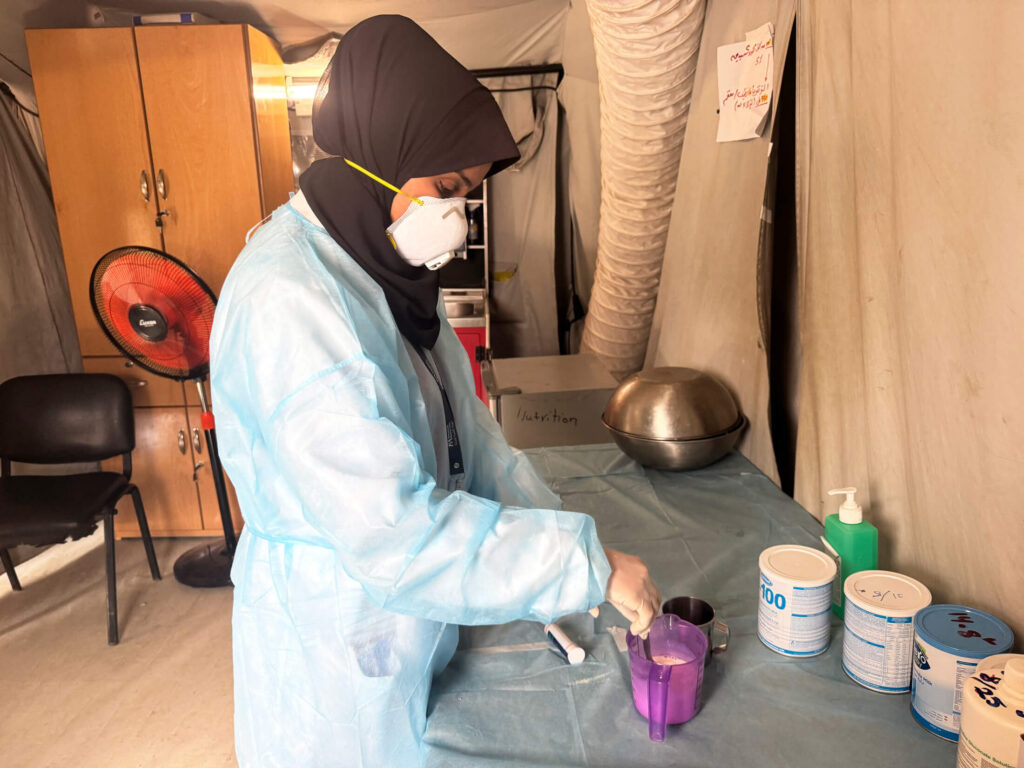
Under the supervision of our Nutrition team, the chefs prepare special meals for patients with specific dietary needs, such as those with diabetes and heart disease, and those recovering from surgeries. Ebrahim prepares an average of 100 meals a day for patients with special needs, including:
- a high-protein diet for diabetic patients, where starches are replaced from rice with meat, chicken breast or tuna;
- soft foods for children, including mashed potatoes, pureed fruits and smooth dairy products; and
- a liquid diet, comprising soups, chicken broth, tea and coffee for patients who are prepping for surgery or are recovering from one.
Getting Creative with Recipes
The hospitals’ kitchen teams have had to deal with acute food shortages in Gaza amid the ongoing conflict. For example, food insecurity had reached catastrophic levels by July 2025, driven by two years of intense fighting. “There was hardly any food available in the local markets,” Ebrahim says.
“Supplies were meagre, but the need was huge,” he adds. “The patients still needed wholesome meals to aid in their recovery. We had no option but to improvise and create meals out of nothing.”
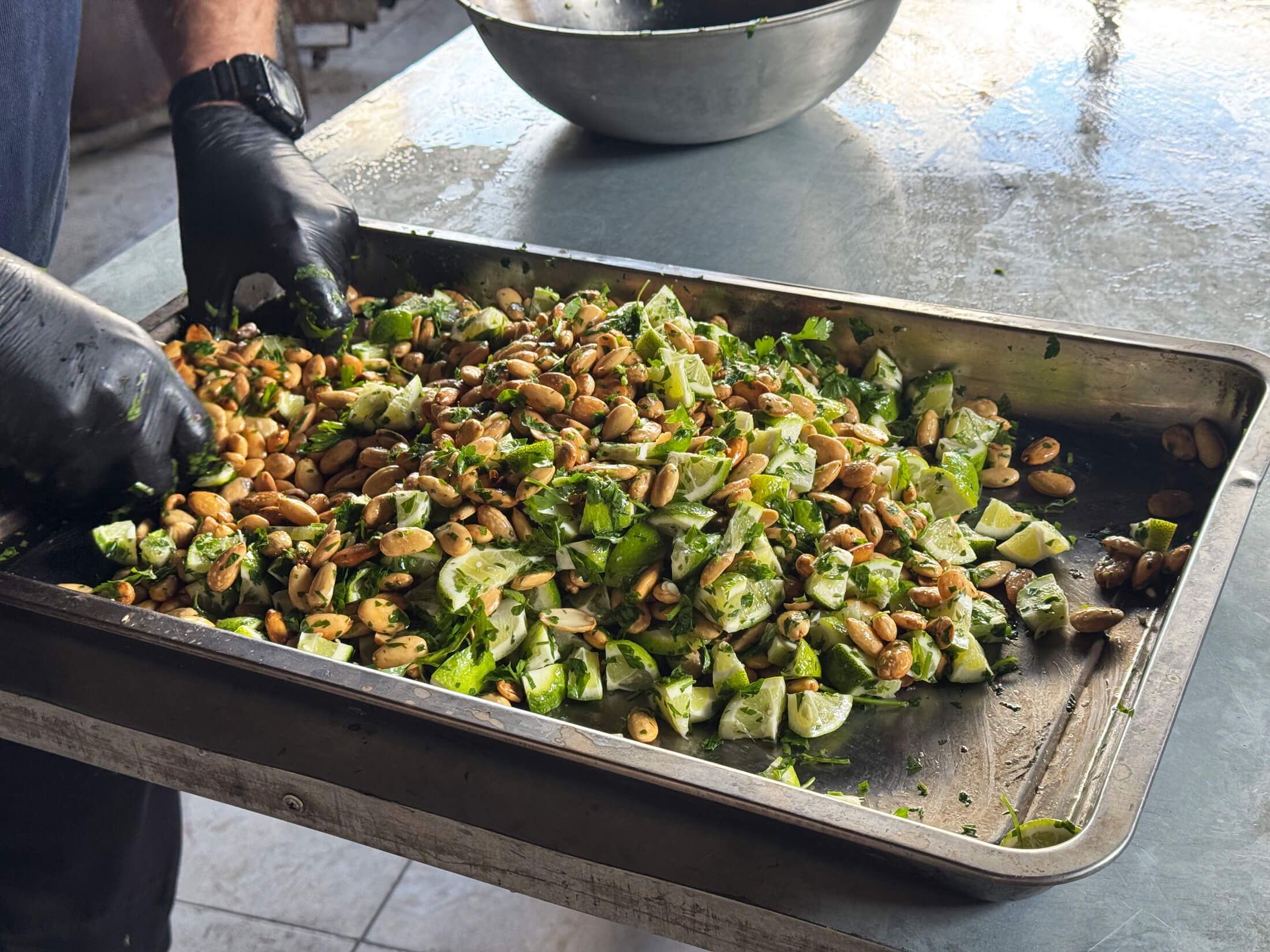
Our chefs turned scarcity into innovation by creating nutritious meals from the simple ingredients that were available to them. One such ingredient was canned tuna, a staple with a long shelf life. The cooks used the tuna to make shawarma—a Middle Eastern dish of thinly sliced meat served on flatbread or pita bread. “This way, the patients were more willing to eat it, given that it was often the only option available,” Ebrahim says. The team also used tuna to make sayadieh, a fish-and-rice dish. They served pasta hot and also as salad, and used powdered milk to make cheese. “To be able to prepare these meals was a tremendous achievement,” Ebrahim adds, “especially under the dire circumstances.”
Thankfully, the food-supply situation is slowly improving, enabling our chefs to continue serving nutritious meals. Breakfast typically comprises boiled eggs, vegetables, avocado and jam or yoghurt. Lunch and dinner sometimes include hummus, a dip or spread made from cooked, mashed chickpeas garnished with lemon juice, garlic, olive oil and salt. Occasionally, we serve traditional Palestinian dishes, such as mujaddara (cooked lentils and rice served with caramelised onions, herbs and yoghurt) and maqluba (meat, rice and vegetables cooked together and flipped upside down when served).


Ask Ebrahim his favorite dish, and he promptly replies, “musakhan”—roasted chicken baked with onions, saffron, olive oil and pine nuts, served on a flatbread.
Delivering Meals with Compassion
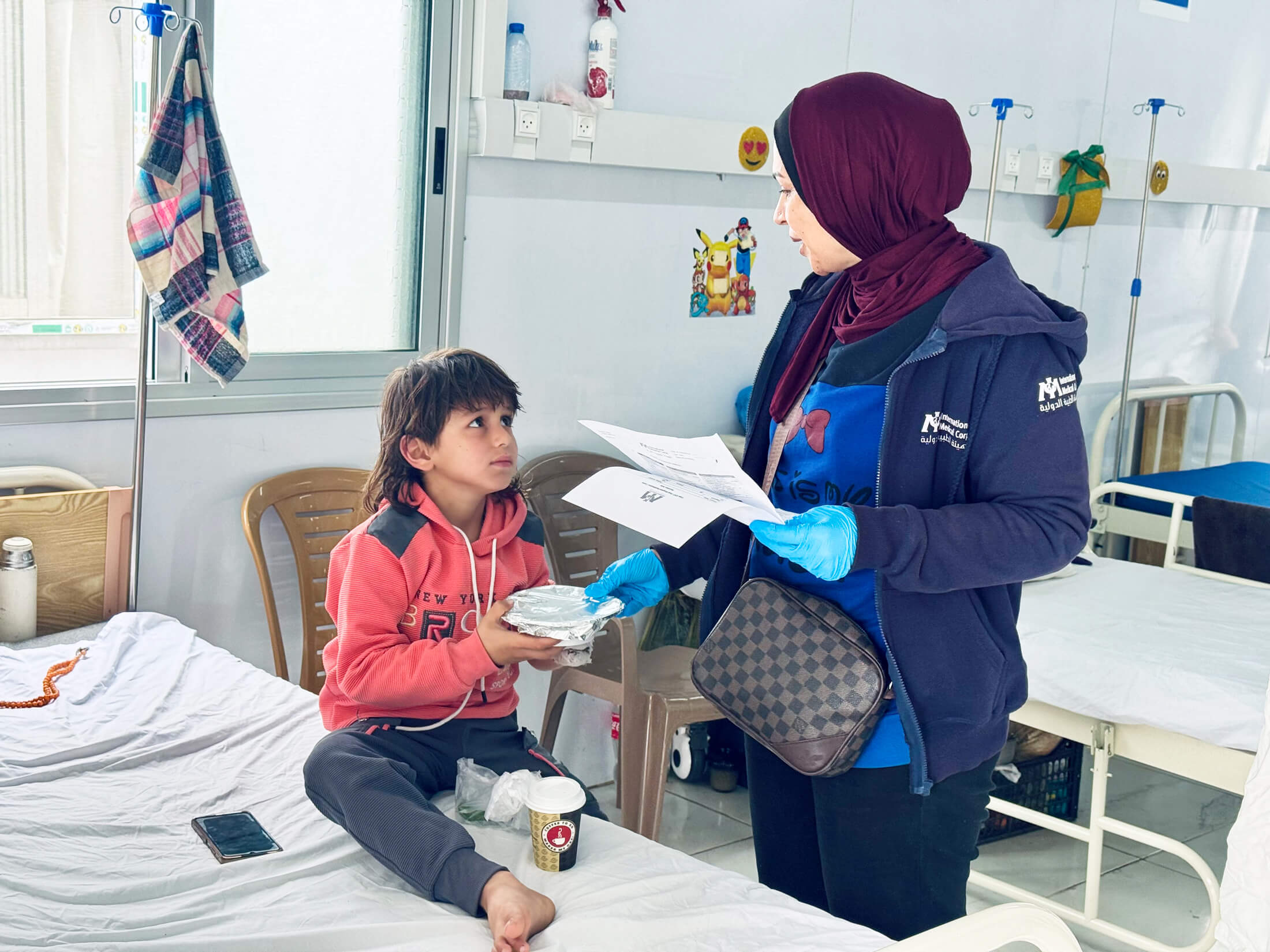
Not all patients accept the meals happily. “Occasionally, a patient might express dissatisfaction or dislike for the food,” says Rasha, who now works in the Deir Al Balah and Gaza City field hospital kitchens and often delivers meals to patients directly. “In such moments, I have to maintain composure. I try to explain to the patient why the prescribed meal is important and how it can help in faster recovery.” But this strategy sometimes backfires, she adds: “I’ve had patients tell me that they don’t want to be discharged from the field hospital because they get such good food and care here, and that returning home may again mean starvation.”
She finds serving meals to children the most difficult task. “I see most children upset and crying because they’re unable to come to terms with their fate, which is sometimes the amputation of an arm or a leg.” As a mother, it breaks Rasha’s heart to see children in distress, so she often heads to the kitchen to prepare special treats and comfort foods for injured children—such as shawarma, rice pudding or chocolate dessert. She also likes to use humour in her interactions to help patients feel cared for. “I always try to bring a smile to every patient so they feel reassured,” she says.


Deep Connection to Patients
Diana Bader joined our Gaza City field hospital as a nutrition supervisor in 2025. She and her team are responsible for preparing tailored meal plans for patients in different departments, including orthopaedics, surgery and paediatrics, as well as in the stabilisation centre. To do this, the Nutrition team follows a four-step approach:
- Every patient receives a nutritional assessment.
- The Nutrition team categorises patients by nutritional risk level.
- They develop individualised meal plans, which our chefs then prepare.
- Nutrition specialists monitor outcomes and adjust diets as needed.
Like Ebrahim, Diana remembers when food was in short supply. “We did our best using the resources available to us,” she says, adding that the Nutrition team devised ways to make meals more enjoyable, especially for children. “We would ask the chefs to grind or mash biscuits to serve with ready-to-use supplementary food. Most of the time, the only available ingredients were rice and lentils, so we made soups using those.”
The fact that Diana’s family, including her children, had to go hungry at times helped her empathise more with the patients. As a mother, she felt a deep connection to the children she treated. “I viewed every child as my own,” she says. “Whenever I saw a child suffering from malnutrition, I imagined it could be my own child, which affected me personally and helped me empathise more with the patients.”
One of Diana’s favourite dishes is grilled chicken steak. “It’s such a high source of protein that I like to offer it to all patients, but we ensure that there’s variety, and we don’t serve it in consecutive meals,” she says.
Diana calls her experience working for International Medical Corps “wonderful” and a “learning journey.” “The collaboration we have with the kitchens and different departments has enhanced the services we provide,” she adds.
Our nutrition specialists and kitchen chefs have helped to strengthen the field hospitals—and heal patients—during one of Gaza’s most challenging periods in recent history. They continue to work in difficult and dangerous conditions, enduring displacement, supply shortages and security challenges to restore the dignity and strength of patients under their care.
Learn more about our lifesaving work in Gaza.