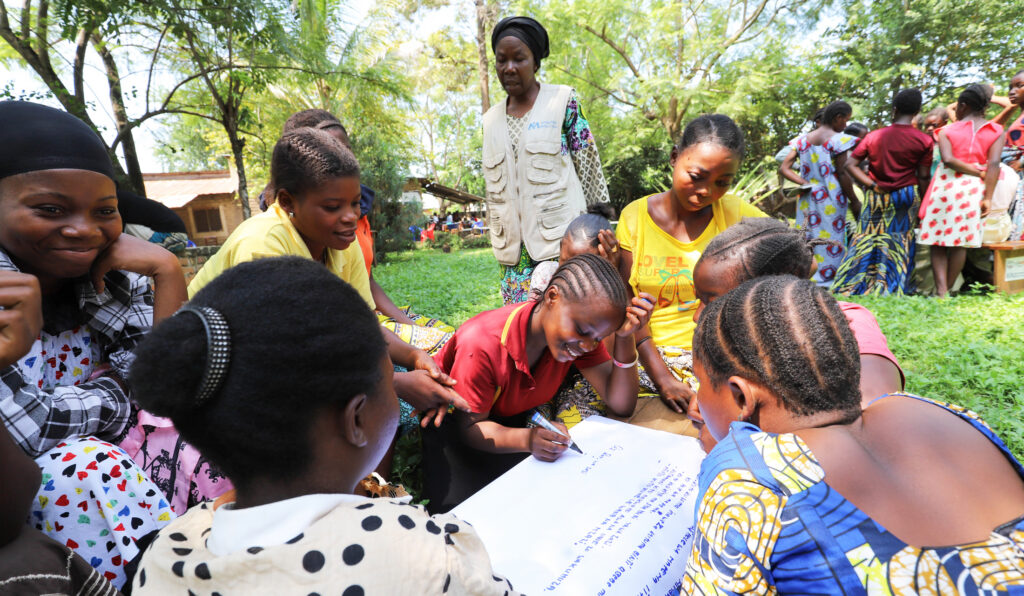
In the Kashebere health area of North Kivu, a province in eastern Democratic Republic of the Congo (DRC), community leaders and men are joining International Medical Corps-led discussions about reducing risks and preventing violence against women and girls (VAWG), creating space for dialogue about household decisionmaking and how to prevent and respond to VAWG. At the same time, women are gathering after completing their farmwork to learn new skills, build savings and help keep one another safe.
With support from the DRC Humanitarian Fund through the TUMAINI 2 Project, we are working with communities in Kirotshe health zone to support women’s safety, dignity and self-reliance. Our work combines practical support with community engagement: We teach women practical life skills through community-based organisations (CBOs), engage men in reflection sessions where they learn about equitable relationships, and our staff work with community leaders to identify VAWG risk areas (locations that are especially unsafe for women and girls).
Community Risk Mapping
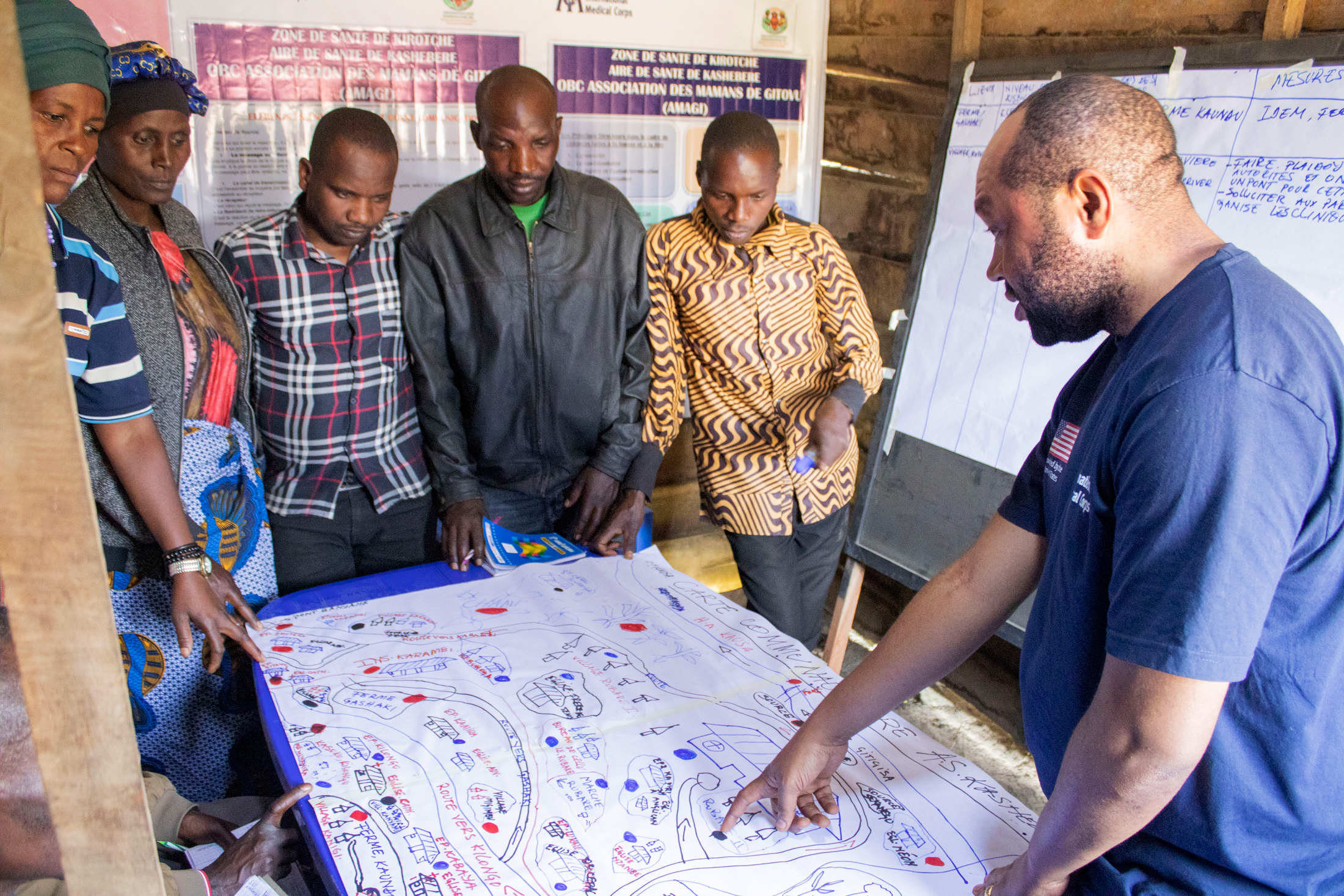
Community-led risk mapping is an important part of prevention. In August, International Medical Corps staff met with Kashebere community leaders to consider practical steps to reduce the threats that women and girls face in certain high-risk areas. The meetings gave our staff an opportunity to emphasise the shared responsibility for preventing VAWG, and for leaders to recognise the importance of working with International Medical Corps and the DRC Humanitarian Fund to respond to the violence.
During the meetings, rather than focusing on individual accounts of violence, participants concentrated on collective problem-solving: identifying broad risks, listening to stories of local experiences and helping communities develop safer approaches. These meetings also aligned with International Medical Corps’ survivor-centred approach, which prioritises safety, confidentiality, respect and non-discrimination in communications about VAWG programming.
Building Skills and Community
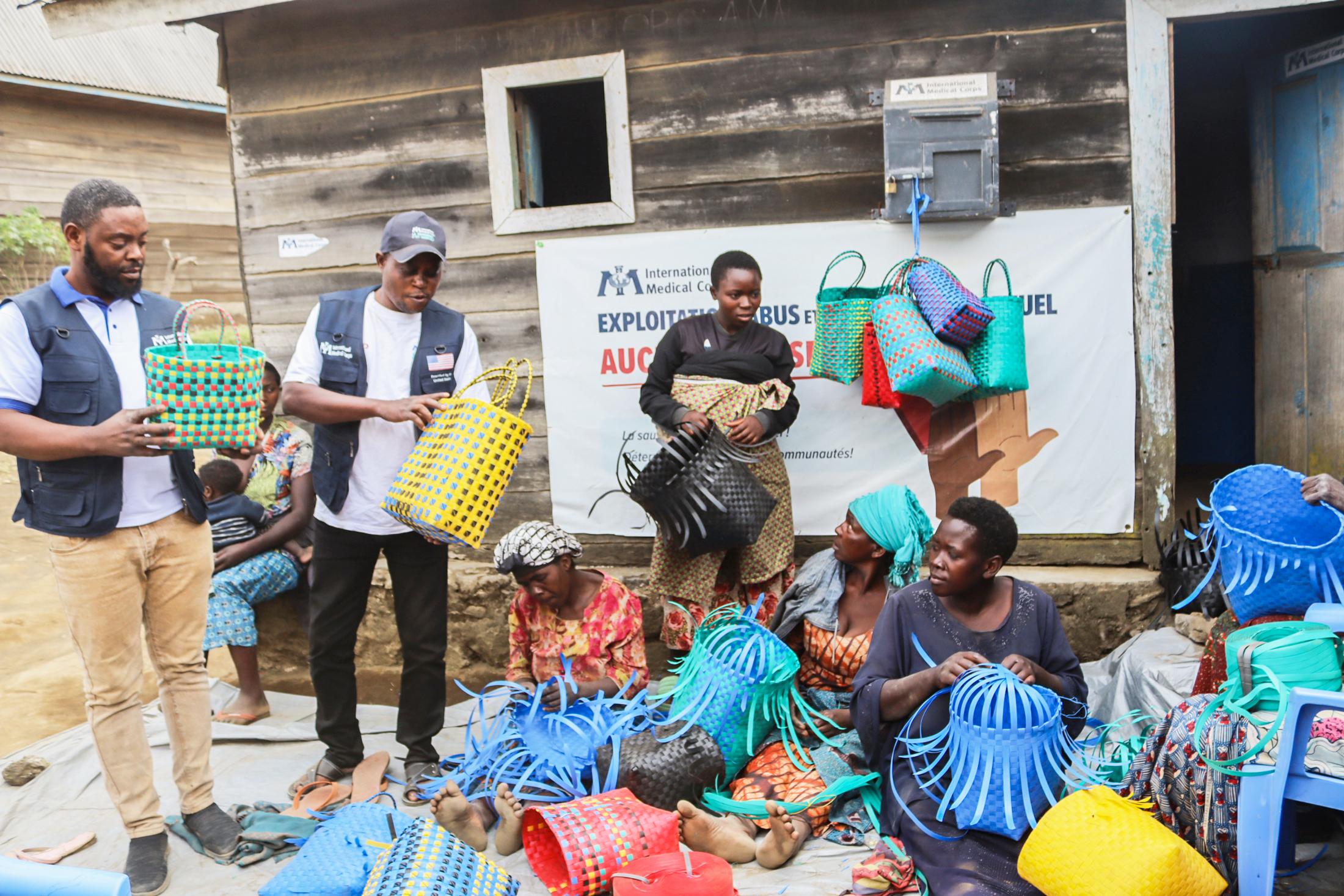
Our community-focused approach in the DRC includes work with AMAGI, a women-led CBO in Kashebere. At AMAGI’s safe space for women and girls, International Medical Corps provides materials to build skills such as basket weaving. By learning these skills, women also strengthen their collective resources. Participants invest some of the income from selling their baskets in AMAGI’s savings fund, which then helps the organisation invest in additional income-generating activities for the women and girls of Kashebere.
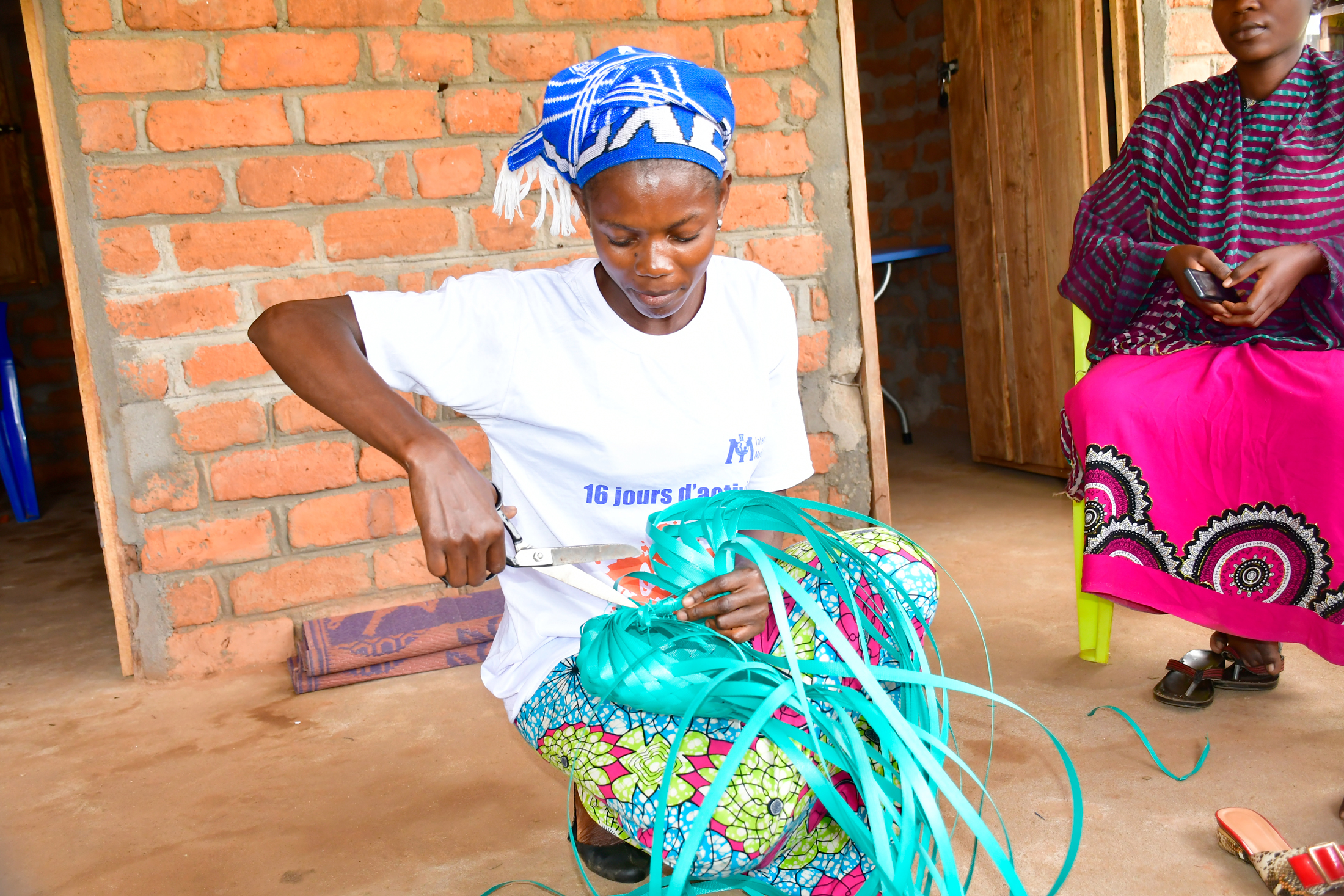
AMAGI provides a setting where women can exchange knowledge, build confidence, develop self-reliance and support one another. For Florence Uzamukunda, a facilitator with AMAGI, the programmes offer more than vocational training. “This is where we learn how to protect one another from violence,” she says. “We also teach one another various skills, like literacy, tailoring and sewing.”
In humanitarian settings, opportunities to earn income, save collectively and learn practical skills help women contribute to decisions that affect their households and communities. At the same time, CBOs provide a trusted setting for shared learning, mutual support and discussion about protection concerns—which is why, as part of our skill-building programmes, we teach women and girls about VAWG.
Engaging Men to Address the Problem at Its Root
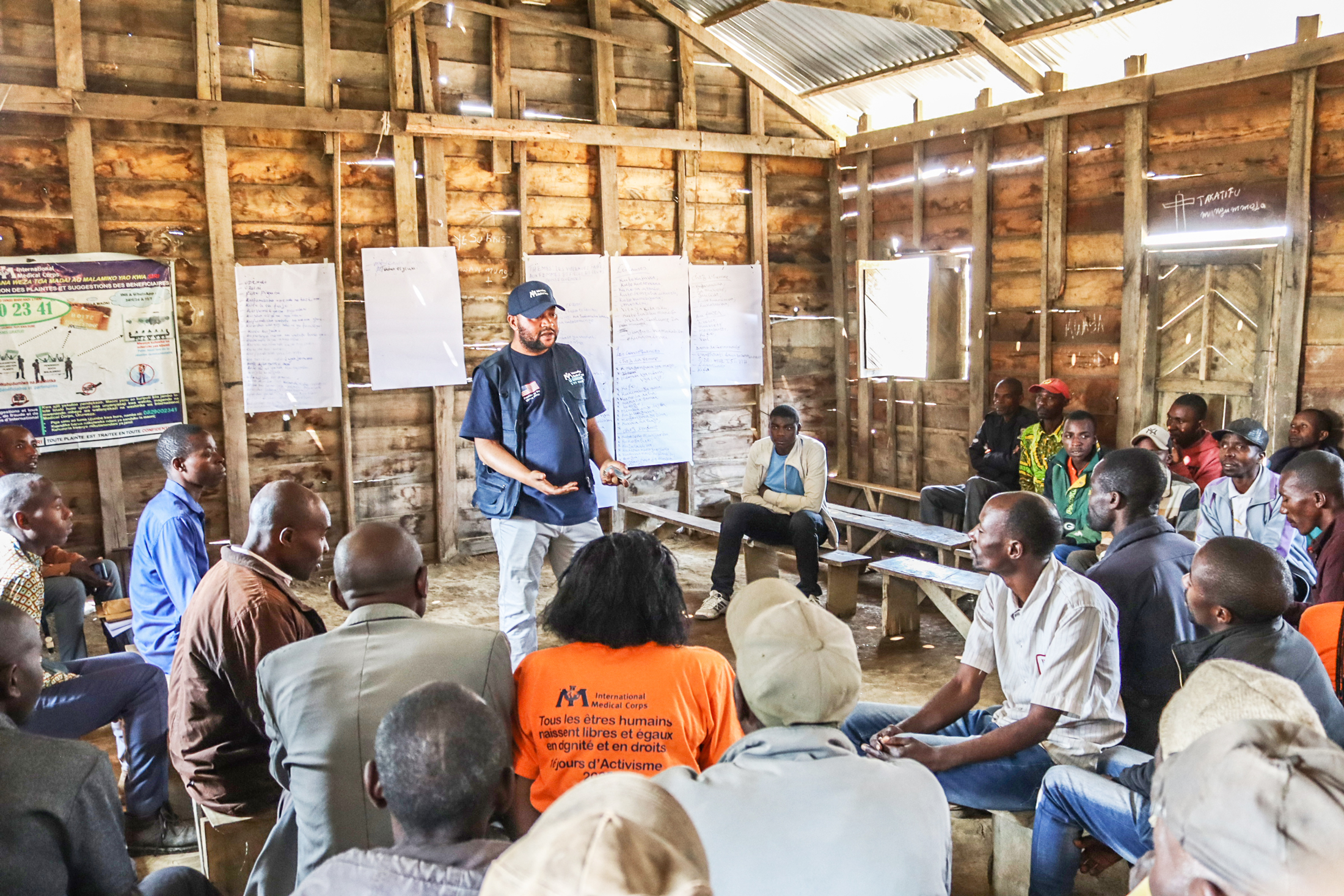
International Medical Corps engages men as partners in preventing VAWG. We follow the principles of community-led programming because when communities identify their own priorities, and when participants shape the programming themselves, the benefits are far more sustainable. So when the women of Kashebere who participate in our skill-building programmes asked us to provide the same information and education about VAWG to their husbands, we brought together more than 30 men to discuss VAWG, its underlying causes and consequences, and practical ways to support safer, more equitable households and communities.
During the session, participants reflected on their own roles and capacity to prevent VAWG. Our session facilitator and VAWG Community Mobilizer Patrick Lunyanya Shenkuru encouraged the men to speak openly about household decisionmaking.
Ndabalinzi Bizimana Aimé gained a new perspective from the conversation. “I did not know that when husbands impose their decisions on the household, it’s another way to deny women their rights, particularly their right to express their opinions,” he says. “Today, I understand how I was negatively affecting my marriage without realising it, and that excluding my wife from household decisionmaking constitutes a form of violence.”
Ndabalinzi adds, “Involving wives in household decisions is essential for family well-being and development. When husbands and wives are unable to reach mutual understanding, progress within the household becomes difficult.”
At the end of the session, several participants publicly committed to adopt more positive behaviours and support healthier, more equitable relationships in their households. Participants also said they plan to share what they learned with other men.
In Kashebere and other communities where International Medical Corps addresses VAWG, locally led action reinforces a clear message: everyone shares responsibility for safety and dignity. International Medical Corps will continue working with women, men and community leaders in the Kirotshe health zone and around the world to prevent violence, promote equitable relationships, and help women and girls build safer, more connected communities.