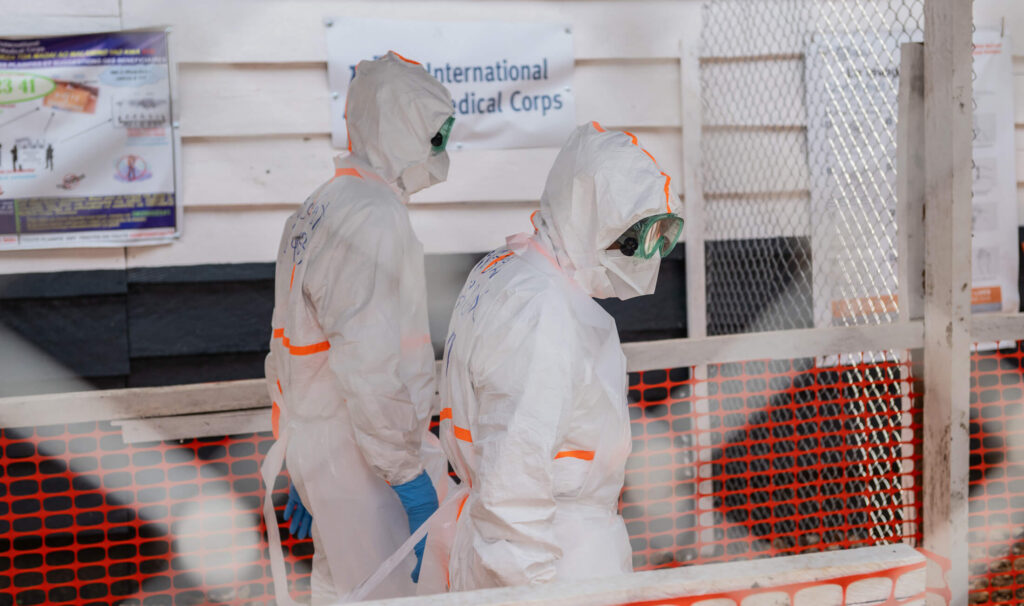
When infectious diseases begin to spread, they can often go undetected, moving silently due to contaminated water, inadequate sanitation or close contact among families and communities. A handful of cases can quickly become an outbreak unless health workers and communities act to contain it.
Prevention is the first line of defence. Vaccination, clean water and good hygiene can stop many outbreaks before they begin. But when prevention is not enough, early detection and rapid response are essential. With more than four decades of experience fighting disease, International Medical Corps uses proven protocols to interrupt transmission and bring outbreaks under control—even in the face of complex challenges. And we do this even as conflict, displacement and cross-border movement increase the risk of disease.
Recent experiences in Yemen, the Democratic Republic of the Congo (DRC) and Sudan show that controlling outbreaks requires a connected response that combines vaccination and community engagement with monitoring, adequate supplies and equipment, safe water and reliable health services.
Preventing Disease Before It Spreads
Immunisation is one of the most effective ways to prevent outbreaks. In Yemen, International Medical Corps has supported national vaccination campaigns since 2012 and strengthened community protection against such diseases as cholera, measles and polio.
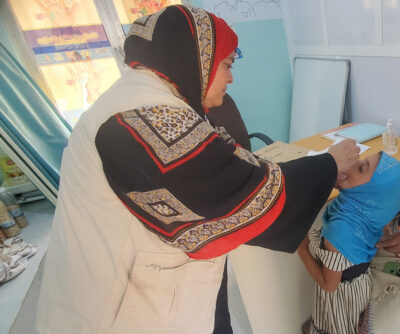
However, misinformation and cultural beliefs, among other factors, have left thousands of parents across Yemen reluctant to vaccinate their children. Many believe that vaccination is a Western concept that does more harm than good. Such misconceptions have reduced national vaccination coverage against preventable diseases, including measles—Yemen ranks among the 10 countries with the highest number of measles cases worldwide. According to the World Health Organization, the country recorded nearly 13,000 cases of measles between March and August 2026.
That’s why International Medical Corps works with Yemen’s Ministry of Public Health and Population to expand childhood immunisation and prevent outbreaks of disease. We train community health volunteers (CHVs) who visit families, answer questions and correct misconceptions, helping parents make informed decisions.
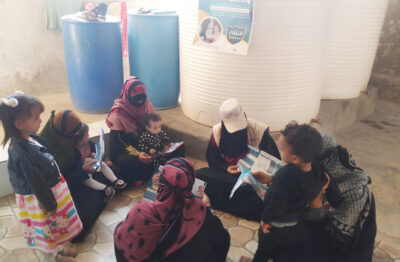
For example, during an awareness session in Al Dhale’e governorate, CHV Haifa Muthana Ali Sale met Abdulbaqi Ali Hassan, a father of five unvaccinated children. Hassan and his wife had misconceptions about the measles vaccine and did not know that the disease could kill. After Haifa explained how childhood immunisation prevents diphtheria, measles and polio, the couple decided to vaccinate their children.
CHVs also serve as a local early-warning network, identifying suspected cases of communicable disease, making timely referrals and sharing information with health teams. By combining vaccination and education, International Medical Corps helps communities in Yemen stop diseases before they spread.
Detecting Outbreaks and Building Community Trust
The Bundibugyo strain of Ebola is spreading across the DRC at the fastest pace in world history, straining health systems as well as community trust. Early detection is critical because infectious diseases often spread before symptoms appear—and it is especially challenging to detect Ebola in its early stages, as it can resemble other diseases endemic to the area, including malaria and typhoid fever.
Additionally, health workers must test for this specific strain of the virus, or risk a false negative. Health officials confirmed the Bundibugyo outbreak in May 2026, which we now know was several months after the earliest known person with a suspected case became ill. This delay gave the virus time to spread before health authorities declared an outbreak.
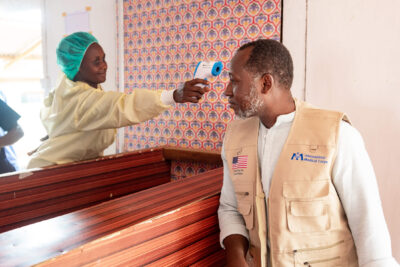
International Medical Corps is responding to the outbreak across the DRC. We operate screening-and-referral units (SRUs)—the first line of defence in detecting and stopping the spread of Ebola—where health workers identify suspected cases, safely triage patients and reduce transmission. Patients with possible Ebola symptoms are then transferred to one of our Ebola transit centres for isolation, supportive care and laboratory testing. Once a case is confirmed, they are moved to one of our Ebola Treatment Centers (ETCs). So far, our teams have conducted more than 1.2 million screenings.
SRUs are especially important when people travel, because someone may become infected in one place and develop symptoms in another—a problem that International Medical Corps helps mitigate by sharing prevention messaging in local communities.
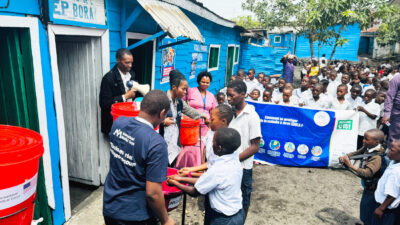
But screening and treatment services alone are not enough. Communities also need to trust the people providing care and understand why that care is necessary. International Medical Corps combats misinformation and builds trust by sharing clear, verifiable information and creating channels for community feedback.
In September, members of a non-partisan citizen collective in Beni, North Kivu, visited one of our ETCs. After seeing our team care for patients and sharing information about the disease, members of the collective who had previously resisted participating in response activities expressed a willingness to help health teams work safely and effectively.
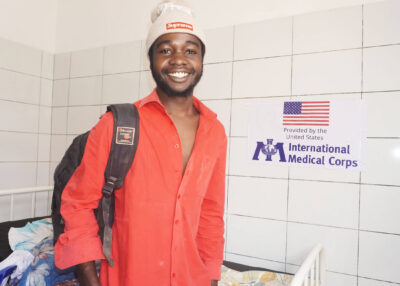
Trust is also built one patient at a time. Asifiwe Jospin was travelling to visit family in Goma, DRC, when Ebola surveillance teams at the port of Goma noticed that he was visibly ill. They referred him to our Ebola transit centre in Virunga Hospital. When Asifiwe first arrived, the experience was uncomfortable. He had heard rumours that Ebola was a “fake disease” and that transit centres mistreat patients. After receiving medical care from hospital staff and testing negative for the disease, Asifiwe told our team that he felt grateful and reassured upon discharge.
Containing Transmission During Conflict and Displacement
In addition to a need for early detection and community trust, containing outbreaks requires clean water and functioning health facilities—services often disrupted by conflict and displacement. Conflict can destroy water networks, damage clinics and force families into crowded settlements with limited safe water and sanitation.
Sudan’s ongoing civil war has displaced millions of people into settings where acute watery diarrhoea, cholera and other diseases can easily spread, while continuing insecurity makes such outbreaks harder to detect and contain.
International Medical Corps helps to break the chain of disease transmission by trucking and chlorinating water, improving sanitation and waste management, distributing hygiene supplies and sharing prevention information.
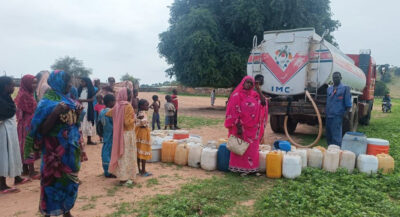
For example, in Central Darfur we delivered safe water to health facilities and displacement sites, reducing reliance on unsafe sources. The water we have provided at Souk Al Khader camp and two gathering points in Um Dukhun has helped conflict-affected families avoid long journeys to clean water—preventing outbreaks of disease and improving underlying health.
A woman we’ll call Mariam, 35, was recovering from kidney disease when our teams first delivered clean water at Alsad Aaali camp in Um Dukhun. “The water provided by International Medical Corps contributed to my recovery,” she says. “Now I am in good health.”
Between April and September 2026, we provided water, sanitation and hygiene services to nearly 290,000 people in Um Dukhun and in Golo, another locality in Central Darfur.
In addition to emergency water delivery, we invest in longer-term improvements to health facilities in Sudan. For example, in the capital city of Khartoum, we paired emergency support with improvements at Fetih Algleen Health Facility, where our team installed a solar-powered water-supply system, connected a new pump to the city water line and added two 2,000-litre storage tanks, restoring running water. We also restored lighting and helped to improve ventilation in consultation rooms and wards, strengthening hygiene and enabling the facility to provide more reliable healthcare.
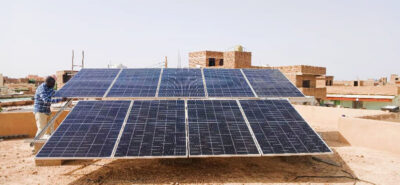
“Electricity and water are no longer a concern,” says Dr. Abdalhafiez, one of the facility’s doctors. “I can work longer hours and focus fully on my patients. The transformation has been a blessing for us as healthcare professionals—and for the people we serve.”
Whether it’s water delivered by truck to a displacement camp or a solar-powered system at a Khartoum clinic, safe water protects families from disease and helps health workers to keep caring for them, even amid conflict.
Breaking the chain of disease transmission involves linking prevention, early detection and trusted care with safe water and reliable health services. Each part of the response helps interrupt transmission—from volunteers helping families to accept vaccination in Yemen, to screening teams referring travellers in the DRC to health facilities, to staff delivering safe water in Sudan. The goal is not only to contain today’s outbreak but also to prepare communities and health systems for the next one.